Nak Pesyai Duq Min and Wet Min A Rare Cultural Practice of Dayak Wehea
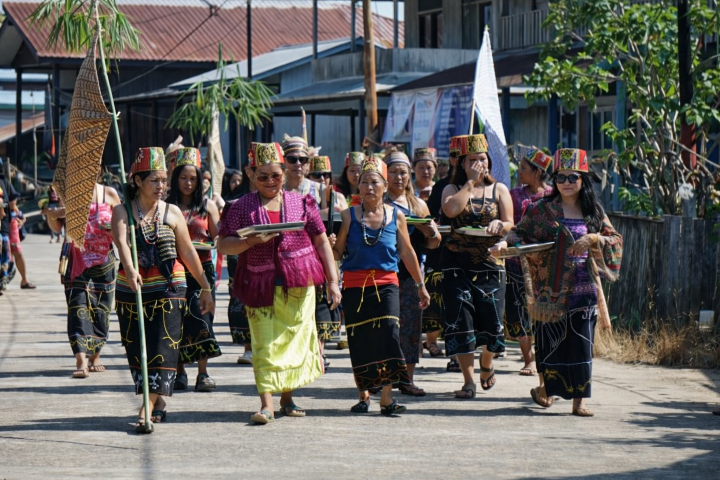 Within the cultural traditions of the Dayak Wehea Tribe in East Kalimantan, there is a meaningful activity known as Pesdong guei neaqliang. This practice is part of the broader Lomplai tradition and reflects the community’s deep connection to nature, symbolism, and collective work.
What is Pesdong Guei Neaqliang
Pesdong guei neaqliang is the process of connecting and arranging rotan kotok into a long line measuring around 40 to 50 meters. Once assembled, the rattan is stretched out using wooden supports, similar to how clothes are hung out to dry.
Beneath the stretched rattan, various items are carefully hung. These often include buah pis, along with rice stalks, betoh or ketupat, bananas, and other symbolic offerings. Each element represents abundance, gratitude, and the relationship between people and their natural surroundings.
Nak Pesyai Duq Min From the Upstream
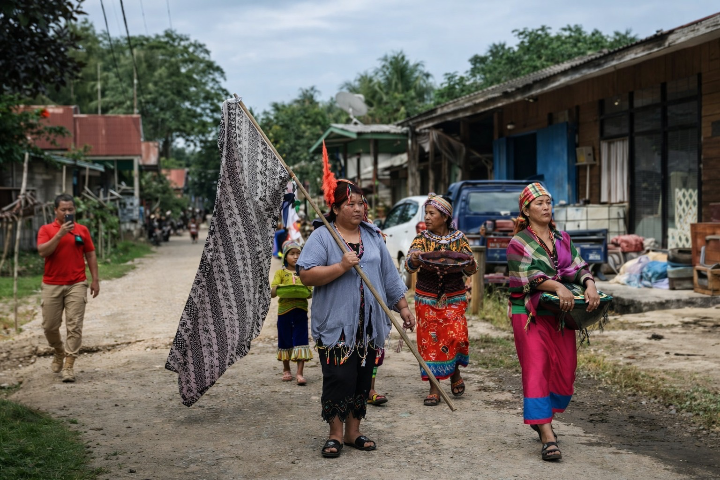 In Nak Pesyai Duq Min, the arrangement begins from the upstream side of the village, following the flow of the environment and the rhythm of the river.
The process of stretching the rattan from upstream carries meaning. It reflects the origin point, where life begins and where resources are gathered. The items hung beneath the rattan become a visual expression of gratitude for what the forest and land have provided.
This part of the ritual also emphasizes unity, as the community works together to build and arrange the structure with care and intention.
Nak Pesyai Wet Min From the Downstream
In contrast, Nak Pesyai Wet Min begins from the downstream area of the village. While the process remains the same, the direction gives a different perspective within the tradition.
The rattan is still connected and extended over a long distance, supported by wooden poles. Beneath it, the same elements are hung, including buah pis, rice stalks, betoh, and bananas.
Starting from downstream symbolizes continuation and return. It reflects the cycle of life and the flow of resources back to the community.
Meaning Behind the Practice
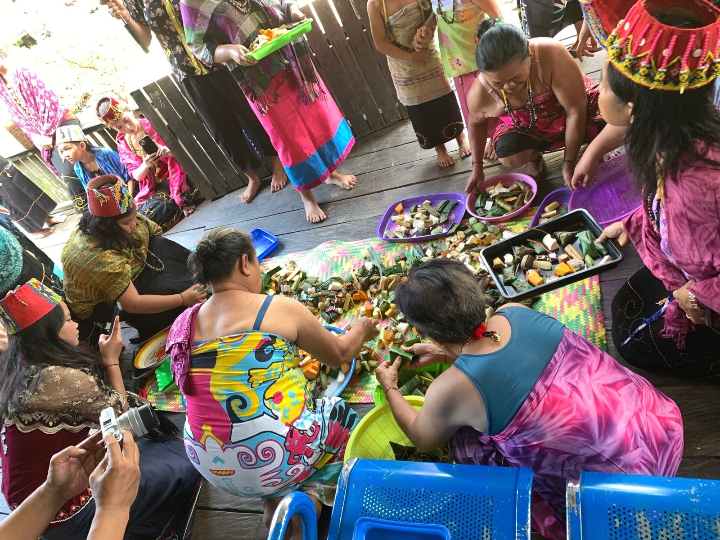 Although simple in appearance, Pesdong guei neaqliang carries deep cultural meaning. It is not only about arranging materials, but also about expressing respect for nature and reinforcing shared values.
The act of working together strengthens relationships within the community. The use of natural materials highlights a sustainable way of living. Every detail, from the length of the rattan to the items that are hung, is part of a larger cultural expression.
A Living Cultural Expression
For the Dayak Wehea Tribe, traditions like Nak Pesyai Duq Min and Wet Min are not performances. They are living practices that continue to shape identity and connection to the land.
Through Pesdong guei neaqliang, visitors and future generations can see how culture, nature, and community come together in a meaningful and lasting way.